By admin
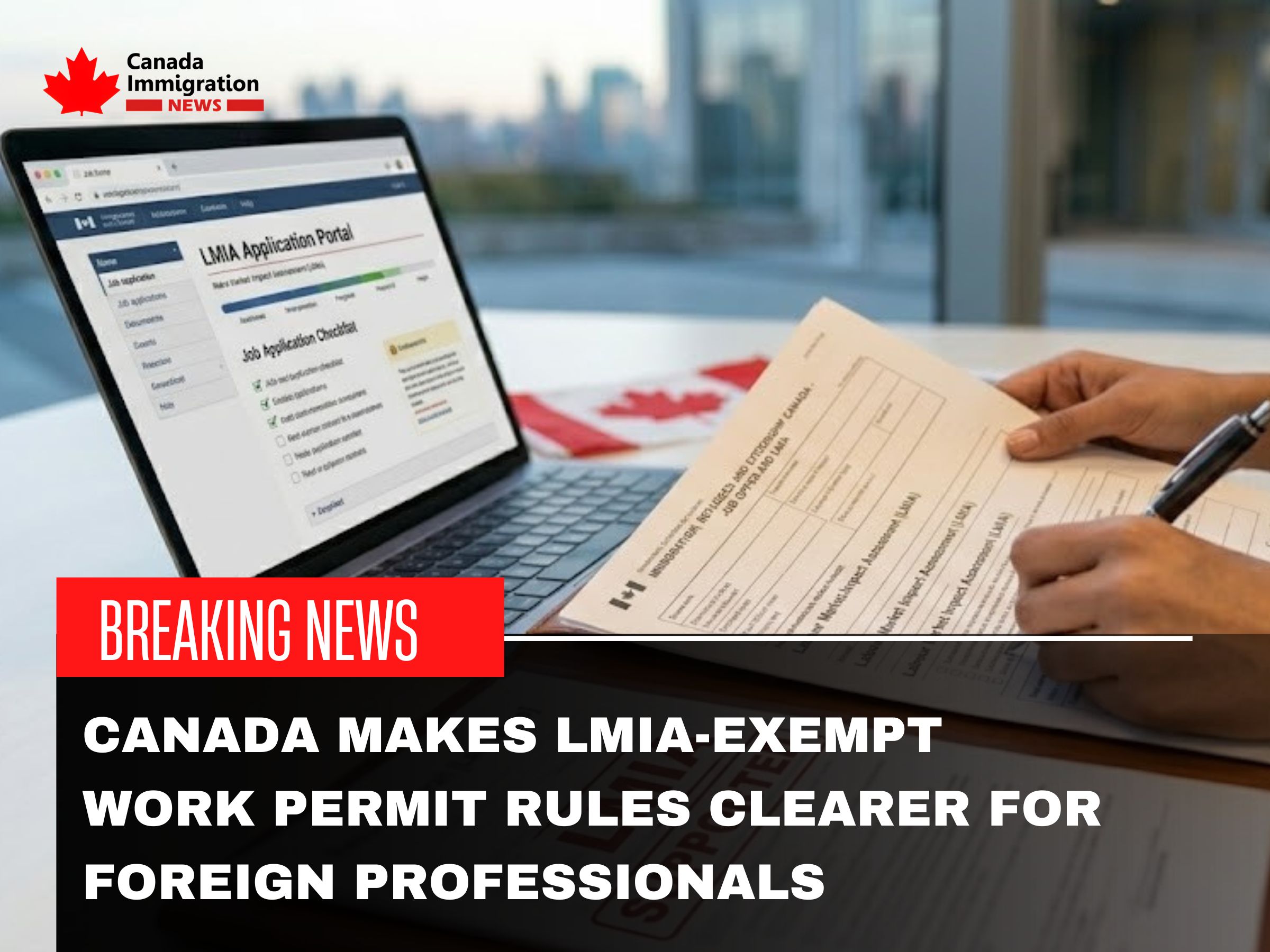
Canada Makes LMIA-Exempt Work Permit Rules Clearer for Foreign Professionals
Canada has officially updated its guidance for LMIA-exempt work permits under the General Agreement on Trade in Services (GATS), bringing more clarity for skilled foreign professionals and Canadian employers.
The latest changes were introduced by Immigration, Refugees and Citizenship Canada (IRCC) and are aimed at improving transparency in the application process for professionals entering Canada under international trade agreements.
The GATS Professionals stream allows eligible foreign workers to temporarily work in Canada without requiring a Labour Market Impact Assessment (LMIA). This makes the process faster because employers do not need to prove that no Canadian worker is available for the role.
The pathway is designed mainly for professionals delivering specialized trade-in services such as engineering, architecture, IT consulting, urban planning, and legal consulting services.
New Countries Added Under Eligibility Rules
One of the most important updates is the expansion of eligibility for permanent residents.
Until now, permanent residents of only Australia and New Zealand could apply under this stream alongside citizens of WTO countries. IRCC has now added Armenia and Switzerland to the approved list.
As a result, permanent residents of Australia, New Zealand, Armenia, and Switzerland can now qualify under the GATS Professionals stream if all other conditions are met.
Citizens of WTO member countries, including India, remain eligible under the existing rules.
Expanded Supporting Document Requirements
IRCC has also expanded the list of supporting documents required for LMIA-exempt work permit applications.
Applicants may now need to provide:
- Reference letters
- Employer support letters
- Educational qualifications
- Professional certifications
- Detailed work descriptions
- Experience records
- Publications and awards where applicable
- Employment offers through the Employer Portal
The new guidance aims to help immigration officers better verify the legitimacy of applications and ensure applicants genuinely qualify under the GATS agreement.
Occupations Divided Into Two Categories
The updated guidance clearly separates eligible occupations into two categories.
Category One
Includes:
- Engineers
- Architects
- Forestry professionals
- Land surveyors
- Agrologists
- Geomatics professionals
For these occupations, the foreign company can have a Canadian business presence.
Category Two
Includes:
- Foreign legal consultants
- Urban planners
- Senior computer specialists
For these occupations, the foreign employer must not have a commercial presence in Canada.
Senior computer specialists are also limited to a maximum of 10 workers per project.
IRCC says the clearer separation will reduce confusion and help applicants understand the exact rules applicable to their profession.
Canada Cracks Down on Shell Companies
The revised guidance also introduces stricter checks for foreign businesses applying under the program.
Immigration officers will now verify whether foreign employers are legitimate operating businesses in their home countries. If a foreign company has only a paper presence or exists mainly to facilitate immigration to Canada, the application may not qualify.
For certain occupations, having a Canadian branch or subsidiary may also disqualify the application under GATS rules.
Key Rules That Remain the Same
Although the guidance has been updated, the core rules of the program remain unchanged.
Applicants can still:
- Work in Canada for up to 90 days
- Apply without an LMIA
- Apply at eligible ports of entry or visa offices
However:
- Extensions are still not allowed
- Certain sectors remain excluded
- Applicants must continue meeting professional licensing requirements
Important Update for Indian Applicants
Since India is a WTO member country, eligible Indian professionals can continue applying under the GATS Professionals stream.
The updated guidance may especially benefit Indian engineers, IT professionals, architects, and consultants seeking short-term assignments in Canada through LMIA-exempt work permits.
Applicants are advised to carefully review the latest documentation and contract requirements before submitting applications.